







Kids grow fast. Suddenly, boots are too small, jackets pull across the back, pants have morphed into culottes, and you can’t for the life of you get those mittens pulled on.
Between one winter and the next, primary school-age children grow an average of 5 to 6 centimetres. The good news is that you can check the fit of your child’s gear in about five minutes, saving you a significant on-snow headache.
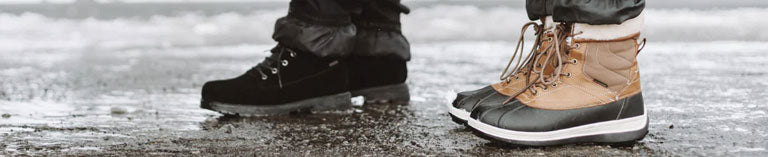
Ski, snowboard or snow-play boots
This is the one that matters most. We can already hear the cries.
A hand-me-down boot that’s too big causes heel lift, making it harder to turn and stop properly. A boot that’s too small causes obvious pain within the first run, and we all know a child in pain is not going to have a good day, regardless of snow conditions.
Check your fit:
Put the ski socks on that you’ll be wearing on the slopes, not a thick hiking sock, not a regular cotton sock. Socks are the biggest contributing factor to cold feet and pain points in boots.
With the boot on but unbuckled, they should be able to feel the end of the boot with their toes. When they stand upright, the toes will lightly brush the front. When they flex forward into a ski or snowboard stance (knees bent and pushing towards the toes), the toes should pull back slightly and no longer be touching.
If the toes are pressing hard against the end when standing upright, the boot is too small. If there is more than about a centimetre of space even when standing, it is too big.
Shop Kids Ski Boots
Shop Kids Snow Apres Boots

Snow Helmet
A helmet that doesn’t fit won’t do its job.
Helmets are sized by head circumference, not age or body size. Two kids the same age can have completely different head sizes.
Check your fit:
Measure around the widest part of the head, following the line just above the eyebrows and around the back above the ears. Use a soft tape measure or a piece of string.
The helmet should sit level, with the front edge about two finger-widths above the eyebrows. Put it on and shake your head from side to side in a “no” motion. It shouldn’t move and wobble around. The chin strap, when buckled, should allow only two fingers of space between the strap and the chin.
If the helmet slips and slides at all, it needs to be sized down or adjusted at the back. If it doesn’t sit down comfortably on the head even when adjusted with the dial adjuster at its loosest, it needs to be sized up.
Shop Kids Helmets
When to replace your helmet:
Helmets that have been used for two or more seasons may have compressed foam liners, which means they feel looser than when new. If you’ve had a heavy crash in your helmet, we recommend replacing it to ensure it will keep your noggin safe.

Jacket and pants
Snow outerwear is designed to be worn over a base layer (thermal) and a mid-layer (fleece or light insulating jacket) so that you can adjust your layers depending on the temperature. Keep that in mind when checking your fit.
Snow Jacket:
With arms down by the sides, the cuffs should reach the wrist. With arms raised, there should be no gap between the jacket hem and the waistband of the pants. Across the shoulders and chest, there should be enough room to raise both arms above the head without the jacket pulling tight.
A jacket that’s too small or too big can contribute to being cold in the snow.
Shop Kids Ski Jackets
Snow Pants:
Snow pants should sit at the natural waist with room to bend the knees fully without the seat pulling tight. Check the inseam; if the pants hem is already dragging on the ground even with the snow gaiters extended, they fit. If the hem is sitting above the boot collar, they are too short.
Bibs give more flexibility on torso length and are worth considering for kids who are growing quickly through the midsection.

Gloves and Mittens
Loose gloves are the primary cause of cold hands, and tight gloves are the primary cause of said gloves being lost because they can’t get them on properly!
Check your fit:
Measure from the tip of the middle finger to the base of the palm. Cross-reference with the sizing chart for the brand of gloves you own. Put the glove on and check that there is no more than a centimetre of space at the fingertips when the hand is relaxed. The glove should move with the hand, not around it. You can generally tell if a glove is too small, as it will be really hard to pull onto your child’s hand.
Mittens versus gloves:
Mittens are warmer because the fingers share heat, and they are easier for younger children who struggle with dexterity in cold conditions. Gloves are better for older kids who want more control. If your child is under eight and complains of cold hands in gloves, try mittens first before buying better gloves.
Shop Kids Gloves & Mitts

Goggles
Goggles are one of the most common items families carry over from season to season without checking compatibility. The fit issue is not the goggle itself; it’s how the goggle sits with your helmet.
Check your fit:
Put the helmet on first, then the goggles. The goggle frame should sit flush against the helmet at the top with no visible gap. A gap at the forehead lets cold air and wind in, which will have your child complaining of headaches and cold eyes within an hour.
Junior goggles are made for smaller face profiles. An adult goggle on a child's face typically sits too low, covering the nose and leaving a gap at the top, which can cause the lenses to fog due to lack of airflow.
Lens condition:
Check the lens for scratches. A scratched lens reduces contrast significantly, which makes it harder to read terrain. If there are deep scratches across the vision area, replace the lens or the goggle.
When to come in:
If you’re still unsure about the fit of any of your gear, bring the kids into our store, and one of our experienced staff members can help you find the gear you need for an amazing school holidays in the snow.
We stock a full range of kids' helmets, jackets, pants, gloves, and goggles from all the best brands.
Posted by Customer Service Team on


