




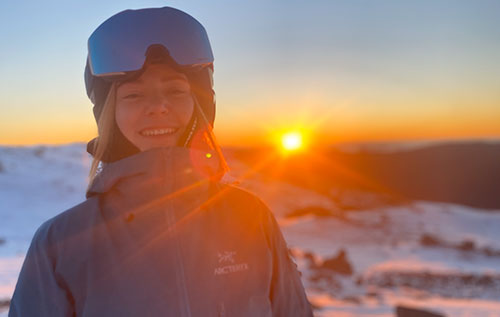



Hi! :) I'm Malena, one of Rhythm's helmet experts. After many years on the slopes and fitting helmets in-store, I've learned a thing or two about keeping your head safe. Let me share what actually matters when choosing your lid.
Why Wear a Helmet? (Seriously, Just Do It)
I'll keep this simple. I've honestly lost count of how many times I've fallen and thought, "Thank god I'm wearing a helmet, that would've hurt."
A helmet seriously cuts down your chance of getting a nasty knock if you fall, and makes any hit way less bad. Things happen fast on the mountain. Maybe you lose control for a second, or someone gets too close. That's why I'm always protected and ready.
The Rules Around the World
In Australia and New Zealand, ski or snowboarding helmets are strongly recommended but not compulsory. Japan's the same. But in Argentina, where I'm from, they're mandatory for anyone under 16.
Honestly though? Regardless of the rules, wearing a helmet is always a smart call.
And no, your bike helmet won't cut it. Snow helmets are built for totally different impacts. The snow helmet handles the specific hits you get on slopes, like falling or bumping into things. Bike helmets are made for road spills at different speeds and angles. Get the right protection for the job.
Getting the Perfect Fit
First off, and this is huge for me, it has to feel comfortable. You absolutely don't want a helmet pressing on your forehead or the sides of your head. That's just a recipe for a bad day on the mountain.
My Helmet Fitting Checklist
- ✓ Snug, not tight - Should feel secure without painful pressure points
- ✓ Stays put - Give your head a shake. Minimal movement = good fit
- ✓ Covers your forehead - Sits just above eyebrows (about 1 inch gap)
- ✓ Works with goggles - They should fit perfectly together, no gaps or pressure
How to Measure Your Head
Grab a soft tape measure and wrap it around the widest part of your head, usually 1-2cm above your eyebrows and just above your ears. Keep it level and snug (not tight!). Match that measurement to the brand's size chart.
Pro tip: If you're in-store, just try them on. Every head's different, and you'll quickly feel which size and shape works best. Some brands run rounder, others more oval. Your head will know.
What's "Asian Fit" All About?
It's not about ethnicity, it's about head shape. Many people have rounder heads (wider side-to-side, shorter front-to-back) rather than the oval shape most helmets are designed for.
If regular snow helmets feel too tight on the sides or loose front-to-back, an "Asian fit" or "round fit" the Mod 1 MIPS Asian Fit Helmet might be perfect. It's all about finding the right fit for your unique head shape.
Making Helmets and Goggles Play Nice
Two main issues to watch for:
-
The dreaded "Jerry Gap"
That awkward gap between your goggles and helmet that screams "newbie". Sometimes fixed by adjusting helmet position. Here's a golden tip most people don't know: if you look inside your helmet where the dial fit system is attached, some models have little slots or dots along a track system that let you raise or lower the anchor point. The higher you place it (closer to the top of your head), the more the helmet rotates backwards. Lowering it (closer to your neck) brings the helmet forward. Small tweak, but it can completely fix a goggle gap. -
Goggles are being pushed down
Usually happens when ski goggle frames are as wide as the helmet shell, causing the helmet to push them down onto your nose or cheeks.
Best move? Always try them on together before buying. While same-brand combos often work well, plenty of mixed setups work perfectly with the right adjustments.
In-Mould vs Hardshell Snow Helmet Construction
In-mould helmets
Outer shell and foam are fused together in one process. They're lighter with better ventilation. Great for all-day comfort.
Hardshell helmets
Thick outer shell (usually ABS plastic) attached to a separate foam liner. Super durable and handles everyday bumps like a champ. Perfect if you're tough on gear or love the park.
Both offer excellent protection and meet safety standards. It's about whether you prioritise lightweight comfort or bombproof durability.
Safety Technology Explained
There are definitely safety standards out there, like ASTM F2040 in North America and the CE EN1077 in Europe, that ensure basic protection. But in my experience, most people don't really ask about certifications. What riders do focus on are the features, and the one that gets mentioned the most by far is MIPS. It's seen as next-level safety, especially for aggressive riders.
What Is MIPS and How Does It Work?
So, MIPS stands for Multi-directional Impact Protection System. Think of it as an extra layer inside your helmet that's designed to protect your brain from a specific type of injury.
Normally, helmets are amazing at protecting you from a direct, straight-on impact (like if you hit your head flat against something). But most crashes aren't perfectly straight-on, right? You often fall at an angle, or your head might hit something and then twist or rotate.
That rotational motion can be really harmful to your brain, causing it to twist or stretch inside your skull, which can lead to concussions or more severe injuries.
This is where MIPS comes in! Inside a MIPS equipped helmet, there's a low-friction layer (it might be a thin plastic liner, often yellow). In the event of an angled impact, this layer allows your head to slide slightly (usually 10-15mm) relative to the helmet.
This small, controlled movement helps to redirect or reduce those rotational forces that would otherwise be transferred directly to your brain. It's like your brain gets a tiny bit of "give" to slow down or change direction more gently, potentially significantly reducing the strain and risk of injury from those tricky angled impacts.
What About Spherical MIPS?
Spherical MIPS is essentially an evolved version of the standard MIPS system. Instead of a separate, visible plastic low-friction layer, Spherical MIPS integrates the technology using two independent layers of the helmet's foam liner. These two layers can rotate independently of each other, acting like a ball-and-socket joint within the helmet. This design allows for even more seamless integration, often leading to better ventilation and comfort while still providing that crucial rotational energy management.
Features That Make a Difference
My Essential Features
As long as it's adjustable and fits well, I'm pretty happy. But these features can really improve your day:
- Adjustable ventilation - Control heat on warmer days
- Magnetic buckles (Fidlock) - Game-changer with gloves on
- Lightweight construction - No one wants a brick on their head
- Audio compatibility - For riders who need their tunes
Ventilation Matters
It really depends on the rider. If you run hot or ride spring conditions in Australia, good airflow becomes key. Look for adjustable vents to control airflow as weather changes. Also helps prevent goggle fogging.
Visor Helmets
Honestly, they probably deserve their own full blog post, but here's the short version: they're a total game-changer if you wear glasses. Since the visor is built into the helmet, you get way more face space. Your glasses won't get smashed against your nose or fog up every five minutes. That extra room also makes it easier to put everything on and off without juggling frames and straps.
With more brands now offering sleek designs and solid tech, they're definitely worth checking out if you wear prescription lenses or just want a hassle-free setup.
Our Go-To Snowboard/Ski Helmet Recommendations
I chatted with a bunch of coworkers about their favourites, and some picks kept popping up across the board. Here's what our team recommends:
For Beginners
- Oakley Mod 1 - Budget-friendly with MIPS and clean design
- Smith Method - The updated Maze. Light, comfy, super user-friendly
- Giro Ledge - Clean skate-style look that younger riders love
- Anon Helo 2.0 - No-fuss helmet that just works
All pack solid safety features at approachable prices. Perfect for anyone starting out.
For Kids
- Oakley Mod 1 Youth - Bold colours make kids easy to spot (and they actually want to wear them)
- Giro Crue - Lightweight with adjustable fit (key for growing heads)
- Salomon Orka Visor - Built-in goggles make life easier for young learners
For Advanced Riders
- Giro Grid/Envi - Lightweight with Spherical MIPS and adjustable venting
- Smith Vantage - Excellent ventilation, MIPS, comfy all day long
- Giro Owen - Minimalist design, spherical MIPS, magnetic clip, and an adjustable ventilation system operated from inside the helmet.
- Giro Jackson/Terra - Lightweight, low-profile, super sleek for serious mountain time
This Season's Standout
The updated Giro Ledge Fit now has a dial fit system. Always been a favourite for park riders thanks to its clean look, but this update lets you dial in the perfect fit. Great to see upgrades without price hikes.
What I Wear
While those are our team's top picks, here's what's been on my head:
In my first season, I had the Smith Maze, super lightweight, warm, and it fit my head (and goggles) perfectly. It was ideal for starting out. That model's now been updated and renamed the Smith Method, but the vibe's the same: clean look, solid comfort, simple functionality.
A couple of seasons later, as I started riding more, picking up speed, and spending more time weaving through trees, I felt it was time to level up. I switched to the Giro Grid, and honestly, loved it from day one. It's way lighter than you'd expect for something so techy.
It has an integrated fit system that lets you dial it in perfectly, plus adjustable ventilation. The magnetic buckle is a lifesaver, and it comes with Spherical MIPS, which gave me extra peace of mind on riskier terrain.
What I really liked is that even with all the features, especially the vents, the design stayed low-profile. Not gonna lie, I appreciated not looking like I was wearing a cheese grater on my head.
Both helmets were perfect for where I was at the time. It really comes down to your riding style and how much time you're spending on the mountain.
Helmet Lifespan and Care
When to Replace
Even without impacts, helmets last 3-5 years. The foam slowly breaks down from sweat, UV rays, and temperature changes. Might look fine, but protection fades.
If your helmet's taken a decent hit? Time to retire it. Internal structure could be compromised even if it looks perfect outside.
In short: if it's old or has taken a hit, swap it out. Your head's too important to gamble with.
Storage Tips
If you’ve still got the original box, use it! Storing your helmet in its box in a cool, dry place is the best way to keep it protected during the off-season. But honestly, any spot with stable, room temperature and no direct sunlight will do the trick.
Common Mistakes to Avoid
The biggest mistake? Not trying the helmet with your goggles before buying it. That "Jerry Gap" might seem small, but it'll mess with your comfort all day.
From a safety angle, wearing thick beanies underneath or putting goggles under the helmet means sizing up to fit everything. The problem is, if your helmet isn't snug, it won't protect properly in a crash.
Frequently Asked Questions
Do I really need MIPS?
Not essential, but it significantly reduces rotational brain injury risk. Worth the investment if budget allows, especially for aggressive riding.
How much should I spend?
- $120-190: Solid protection, basic features
- $190-300: MIPS and better comfort features
- $300+: Latest tech, lightest weight, best ventilation
Quick tip: Stick with reputable brands you recognise from the slopes. Your head's worth investing in proper protection, so go with brands that snow sports retailers actually stock and trust.
Can I buy online?
Yeah absolutely! In an ideal world, we'd recommend coming in-store to try on different models. But if that's not possible, measure your head and check the size chart for your preferred brand. If in doubt, we suggest ordering a couple of sizes to try at home and returning the ones that don't fit for a refund.
Men's vs women's helmets?
Often just colours and graphics. Some women's models might have ponytail-compatible fit systems, but protection's identical. Choose whatever fits best.
Should I hire a helmet before buying?
Absolutely! If you're new to snow sports or not ready to commit, rent a helmet from our ski hire team, then spend time trying on different helmets in store (with your goggles on) as a smart way to figure out what works for you.
Should kids wear adult helmets?
It's all about proper fit. Children need helmets that fit their smaller heads correctly, typically youth-specific models. Adult helmets are typically too heavy and large, compromising safety. That said, some smaller adults might actually fit better in larger youth sizes. The key is finding what fits your head properly, regardless of the label.
Ready to find your perfect helmet? Visit us in-store where our team would love to help you nail the fit, or shop our full helmet collection online. Whether it's your first lid or an upgrade to something techy, we've got you covered.
Posted by Rhythm Snowsports on


